Exumo
- Product
- Exumo, AI-native global trade intelligence platform
- Role
- Product, 5-person team. Bridge between 2 ML engineers and 2 GTM leads
- Skills
- Agentic system designRapid prototypingCustomer discoveryGTMProduct strategy0 to 1 product development
The Problem
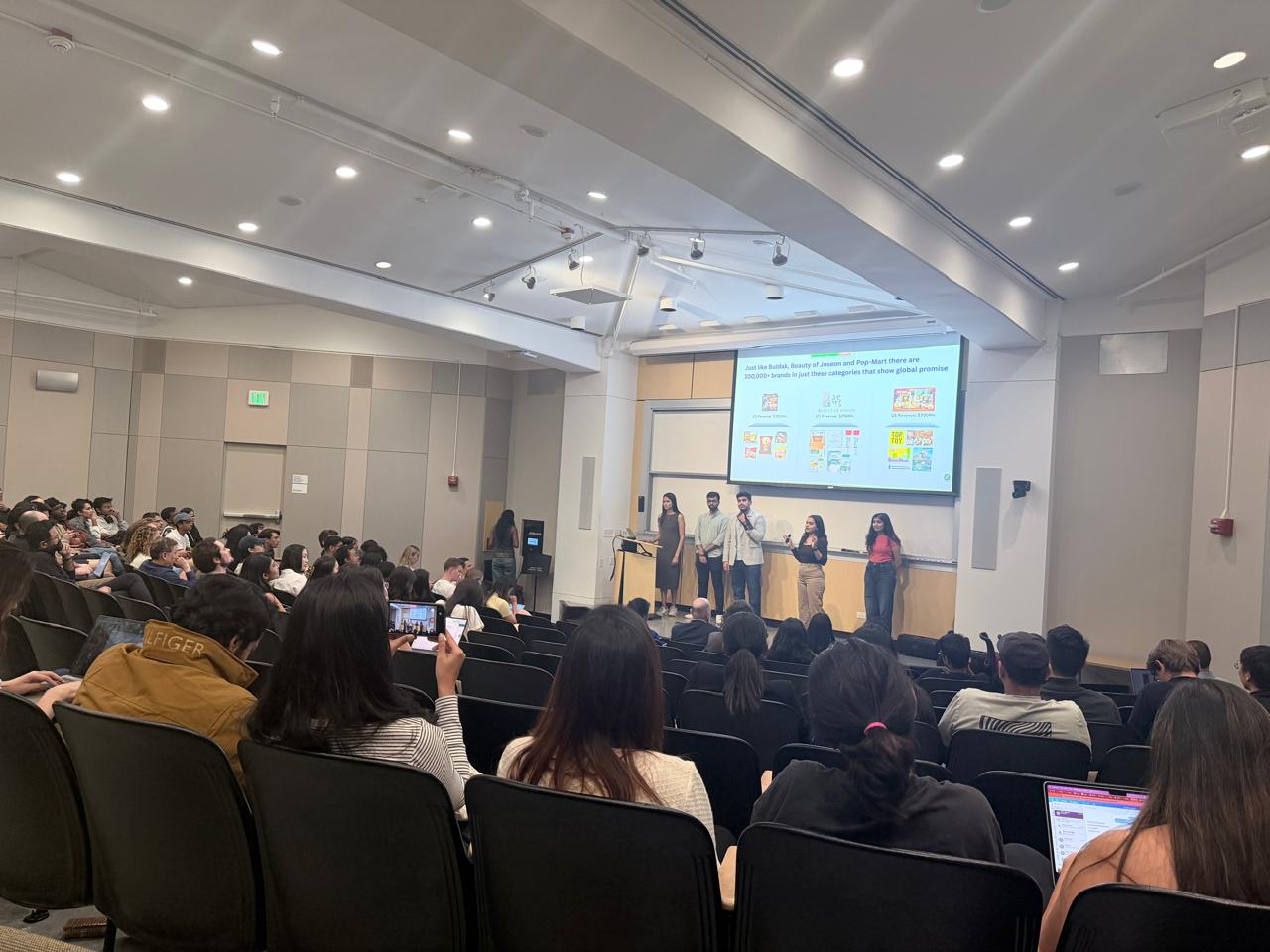
Exumo came out of Stanford's Lean LaunchPad, a twelve-week program built on Steve Blank's customer development method. We were one of eight teams admitted. The format pushes you out of the building every week to talk to customers, then back in to defend what you found to faculty and venture partners: partners at Pear VC and Bessemer Venture Partners, and a General Partner at the Sarah Smith Fund. Every week they cross-questioned the discovery itself, who we had spoken to, why those people, what exactly they said, and what in the plan changed because of it. Claims that were not backed by an interview did not survive the room.
Our domain was cross-border trade for consumer brands. Exporters kept telling us the same thing: putting together a credible list of international buyers and reaching them takes 8 to 10 months and costs real money. We built the obvious fix, automated buyer-list generation with outreach on top. It worked and nothing happened.
Contacts are not conversations. List building was never the constraint. An importer has no reason to take inventory risk on a brand they have never seen sell.
So we went and talked to retailers, who nobody in this market interviews. They want new brands, because new brands bring customers in, and they were already passing demand signals back to importers informally. Once we laid out what each side actually wanted, the product got obvious.
| Party | Wants |
|---|---|
| Exporter | To sell abroad |
| Retailer | New brands that pull customers in |
| Importer | To minimize supply-chain risk |
The System
The importer's problem is risk, not discovery. Vetting plus proof of demand is what fixes it.
The information you need to de-risk a cross-border bet exists but sits in pieces. Trade records, distributor footprints, retail assortment, category gaps, local demand signals, all in different formats and languages and institutions. Assembling it used to mean paying an export consultant for a few months, which is why only large brands bothered.
That kind of synthesis over messy sources is what agents recently got good at, so we built the platform as agents rather than a database, and kept rebuilding as new model releases raised what a single run could hold.
On the exporter side, research agents pull fragmented trade and retail data into a picture of a target market, find distribution gaps and SKU openings, and run local demand tests so the brand shows up with evidence instead of a pitch. On the importer side, matching and vetting agents surface brands that already carry demand proof, so discovery becomes a shortlist with risk attached to each name.
Both sides run off the same evidence layer. Demand signal collected for an exporter is what an importer needs to lower risk, so one pipeline covers two customers with opposite jobs.
I sat between the two ML engineers building the pipelines and the two GTM leads in the market, turning interview findings into requirements and turning what the agents could reliably do into a GTM story that did not overpromise.
The Insight
12+ customer interviews across market tiers and geographies, run alongside the build rather than before it. Three design partners piloted it, all established Indian companies past a real revenue threshold, and all three wanted to keep going. Once the ICP was clear they onboarded in under 10 days, after weeks of getting nowhere with the first version.
That is the bar the program sets. If nobody will pay and nobody will give you their hours, you do not have a product.
When something works and nothing changes, the problem is usually who you talked to. Work has continued on the platform since the program ended.